

About piston engines
Introduction
The development and production of piston aircraft engines in Czechoslovakia has a successful tradition of more than 90 years. In history, major companies such as WALTER (later renamed Motorlet Praha), AVIA, PRAGA, TATRA and JAWA have established themselves in this field. Until the Second World War, engines of several concepts were produced (radial, in-line, forked, with flat cylinder arrangement, air and liquid cooled, with outputs from 40hp to 1,000hp. Some of these engines were produced under licence contracts from foreign manufacturers, while others were the result of domestic development by Czech and Moravian companies.
In the late 1920s, demand from aircraft designers began to focus on inline, air-cooled engines. Company named WALTER launched in 1932 the first inverted four-cylinder Junior 4 (105 hp) of its own design and in 1935 the engine Minor 4-I (85 hp), which is the first of the family of contemporary LOM engines (the concept of an inline, inverted, air-cooled spark-ignition engine with a cylinder bore of 105 mm and a stroke of 115 mm).In 1946, the tests of the new version of the Walter Minor 4-III (105 hp), the first new engine after World War II, were successfully completed. Between 1946 and 1960, 3,092 of these were produced. More than 1,500 of the more powerful Minor 6-III (160 hp) six-cylinder engines were built between 1947 and 1963.


In 1956, mass production of the M332Sc four-cylinder (140hp) with a switchable supercharger, low-pressure injection system, OHC timing and electric starter began. In 1959, series production of the six-cylinder inverted air-cooled piston engine M337Sh (210k) began.

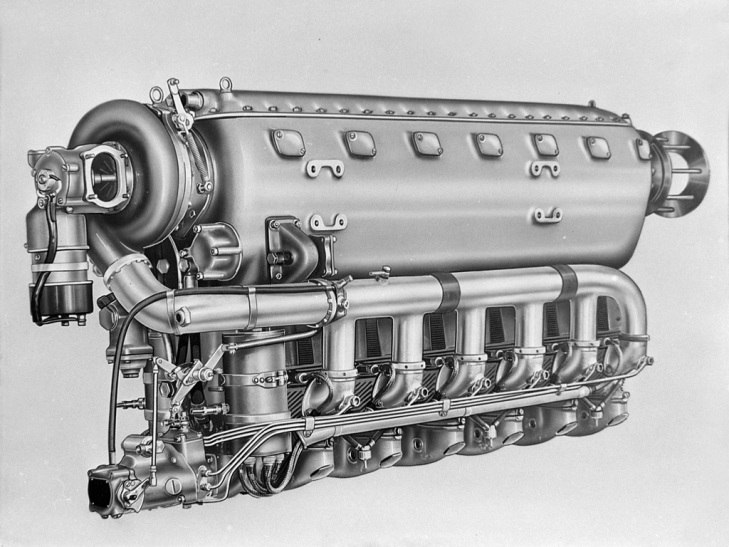
Four-cylinder engines were used in the single-engine L-40 Meta Sokol or the twin-engine Ae-145, while six-cylinder engines were used in the small transport aircraft L-200 Morava. By 1964, Motorlet had produced a total of 1,143 of these engines. Since 1964 the production of piston engines was transferred to the Avia plant in Prague 9 -Letňany by decision of the higher authorities.
For the needs of Moravan Otrokovice, a major manufacturer of training, tourist and aerobatic aircraft, the original Sc and Sh models were improved by AVIA's design team and a number of derivative models were created: In 1964 the M137A for the Z-526 series aerobatic aircraft, and the M137AZ for the Z-42 touring aircraft, in 1970 the M337A for the Z-43, and finally in 1980 the M337AK for the Z-142 multirole aircraft. These new models differed from the original Sc and Sh models by adapting the oil and fuel system to allow aerobatic operation, The M137A/AZ type engines allowed for high piloting, and all models had a longer service life compared to the original models. Between 1964 and 1992, over 2,000 of these engines were produced at Avia. The decision to continue AVIA's orientation exclusively towards the automotive industry and the special equipment segment, with only the development and production of aircraft propellers retained from aviation production, led to the subsequent conclusion of a delimitation agreement with the Malešice Aircraft Repair Works in 1988, which regulated the conditions for the transfer of the entire aircraft piston engine programme to the Malešice site.
LOM PRAHA s.p. - History
The history of LOM PRAHA begins on 5 October 1915, when the production of the first aircraft engine was completed in the aviation department of the Breitfeld-Daněk company. It was a type of Hiero engine manufactured under licence of the Viennese company WARSCHALOVSKI &Eisler.
Further expansion of production began after the merger of Breitfeld-Daněk and ČKD in 1927. Despite the economic stagnation in the early 1930s, the period 1918-1938 was very successful for the development of aircraft production in Czechoslovakia.
At the beginning of II. World War II, repairs of German DAIMLER-BENZ, JUMO and ARGUS engines were introduced. In 1942, assembly lines and test facilities were moved to newly built premises on the eastern outskirts of Prague in Malešice. The original plant in Prague-Libeň was destroyed after the Anglo-American air raids in 1945 and only a part of the aviation department remained in Malešice, which gradually developed into a modern aircraft repair and production facility.
The production programme in the post-war years consisted of repairs of Argus 410, 411, Jumo 211, Merlin and Continental engines, which served in the post-war Czechoslovak Army.At the end of the 1940s and the beginning of the 1950s the Czech Air Force switched to Soviet aircraft technology and gradually began to repair piston engines of the type AŠ-21, M-42, AŠ-62IR, AŠ-82T. At the same time, repairs of the latest Czech aircraft engines Minor 4-III and 6-III, M-208 B and PRAGA D were started.
An important milestone in the development of LOM was 1954, when it came under the administration of the Czechoslovak Ministry of Defence. The aim was to fully provide repairs of aircraft engines for the Czech Air Force and also for other customers in Czechoslovakia and abroad. The completely new production programme was focused on the repair and overhaul of the RD-45 and VK-1 aircraft engines of the MIG aircraft, which also required a large capital construction.
In the late 1950s and early 1960s, the new MIG 19 and MIG 21 fighter aircraft and the AERO L 29 Dolphin trainer were introduced. These changes in armament also included the introduction of overhauls and repairs of the revolutionary new RD-9B, R-11 and M 701 engines. Modern concepts, design and technology required further expansion of production capacity between 1965 and 1970. A new assembly hall was built in Stará Boleslav with a logistics department and jet engine testing facilities.
In the late '60s. The AL-7 jet engine for the SU-7 and the M 462RF piston engine for the Z-37 Bumblebee agricultural aircraft.
In the first half of the 1980s, repairs were completed on most inverted and radial piston engines except for the M 462-RF, M 137 and M 337 types. The same applied to the RD-45 and VK-1 jet engines. On the other hand, the range was extended by the new types R 13, R 95S, R 29, R 33 and AL 21F3 jet engines. A unique export item was the offer of AI 25TL engines for the L-39 Albatros, including aircraft repair and upgrades.
At present, the LOM PRAHA s.p. is the only repair facility for Mi series helicopters in NATO and EU countries, which is certified by the Russian design bureaus MVZ Mil and OAO Klimov, the International Aviation Committee MAK and domestic aviation authorities. Compared to many competitors LOM PRAHA can offer comprehensive overhaul services, i.e. complete life cycle support for aviation equipment. Our greatest advantage is our experienced technical staff and use of advanced technology, and our emphasis on high quality.
It focuses mainly on overhauls of Mi-2, Mi-8/17, Mi-24/35 helicopters and their aggregates (turboshaft engines, reducers and auxiliary starting engines), repairs of L-39 aircraft and their engines. The subsidiary VR Group, a.s. is engaged in the production of simulators and simulation technologies for aircraft, helicopters and ground forces.
Development of piston engines and production in LOM PRAHA s.p.
The delimitation process was completed in 1992. Since that year, LOM PRAHA s.p. became the main designer of inverted piston engines with a view to continue the development and serial production of engines and spare parts.
In the second half of 1992, production of the four-cylinder engine type M332A began. The production of key engine parts (crankshaft, camshaft, piston, connecting rod, head including valves, etc.) was developed directly at LOM Praha. The airworthiness certificate was issued on 30 November 1992. A derivative of the M332A became the M 332AK engine, which is designed for aerobatic operation (similar to the M 337AK engine). The certificate for the M 332AK engine was issued in October 1994.
The next stage in the development of LOM engines is to increase the performance of currently manufactured engines as a direct market requirement. A 10% increase in RPM on all operating modes was chosen, which resulted in a +15kW/20hp increase in the four-cylinder M332B engine and a +19kW/25hp increase in the six-cylinder M337B engine on take-off. The usable operating time with the compressor engaged has been extended. The Model B engines were granted type certificates in 2000.
The final and culminating stage of development is the M332C and M337C engines, which differ from the B models by a further increase in power of +6kW/8hp for the four-cylinder and +12kW/17hp for the six-cylinder. Design differences include new pistons with increased compression ratio, front end crankshaft modification, integral oil pressure manifold for constant speed propeller control, fine full flow oil filtration, increased flow rate oil pump, Optional automatic altitude correction of fuel mixture composition, single lever throttle control and propeller blade angle adjustment (also for pennant and reversing propellers) and installation of thermostatic valve for oil cooler installations. The aim of the development was to meet the market imperative for low fuel consumption, low engine weight for the power category, simple engine control, the ability to use low octane, commercially available unleaded gasoline and sufficient operating time. The C model engines have achieved specific gravity values of 0.82kg/kW, specific fuel consumption of 265g/kW*hr, are certified to run on low octane unleaded petrols, including RON min 91 motor gasoline and have a recommended service life of 2,000 hours until overhaul.
From 1992 to 2002, LOM produced 141 four-cylinder and 98 six-cylinder engines of various models.
The engines are certified for the general aviation category under the FAR 33 certification basis and are transferred to EASA oversight. The type certificate is valid in all EU countries and in addition national certification passes have been carried out for selected models in the RF and Canada. Especially in the North American market, LOM engines are operated in the "Experimental" category.
 English (UK)
  Čeština